
Admission Against Cancellation/Lapsed Seats
Apply Now
B.Tech | BCA | MCA | M.Tech
Apply Now
B.Com with ACCA | BBA with ACCA
Apply Now
B.Com | BBA | MBA | EMBA | MBA (CII)
Apply Now
B.Sc.(Hons) | M.Sc. Agriculture
Apply Now
B.Design - Fashion Design | Interior Design
Apply Now
B.Pharm | M.Pharm | D.Pharm
Apply Now
B.Sc - AI | Cyber Security | Data Science
Apply Now
B.A. (Hons) - Political Science | Psychology | Economics
Apply Now
Public Self-Disclosure
UGC Information Under Section 13
Fee Payment (EMI)
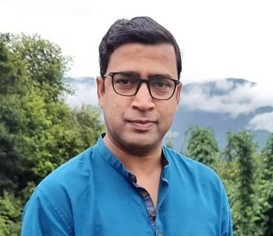
Dr. Vijay Kumar

Dr. Vijay Kumar

Designation Professor
School Anand School of Engineering & Technology
Department Biotechnology
E-mail vijay.kumar@agra.sharda.ac.in
About

Dr. Vijay Kumar is a Professor in the Department of Biotechnology at the Anand School of Engineering and Technology, Sharda University, Agra. He previously served at Amity University, Noida, from (2018–2025). His research centres on the systems biology of neurodegenerative diseases, computational biophysics of protein folding, protein misfolding and aggregation, and the role of toxic RNA species in neurodegeneration.
He earned his Ph.D. in Biophysics from the All-India Institute of Medical Sciences (AIIMS), New Delhi, with research on the structural and biophysical characterization of heparin-binding proteins through structural proteomics. He then completed postdoctoral training at the University of Massachusetts Medical School, USA, studying the folding and aggregation of proteins implicated in Amyotrophic Lateral Sclerosis (ALS) and Frontotemporal Dementia (FTD). On returning to India, he joined Jamia Millia Islamia, New Delhi, as Principal Investigator on a project funded by the Science and Engineering Research Board (DST-SERB).
With more than a decade of experience in biotechnology research and teaching, Dr. Kumar has supervised 5 Ph.D. students and mentored over 40 undergraduate and postgraduate students. His research has been supported by the Indian Council of Medical Research (ICMR), with funding exceeding ₹80 lakh. He has authored over 100 publications and 8 book chapters in reputed international journals, with more than 5,000 citations and an h-index of 36, and has served as editor for five books published by Academic Press, UK.
Dr. Kumar's contributions have been recognized with the Young Researcher Award and a DAAD Fellowship (Germany), and he was named among the top 2% of scientists worldwide in the Stanford/Elsevier rankings (2023–2025).

Experience

10+ Years

Qualification
  • PhD: 2011
  • M.Sc.: 2005
  • B.Sc.:2003
Award & Recognition

  1. NESA Eminent Scientist Award2025
  2. Outstanding Researcher in Neurobiology, 8th Venus International Healthcare Awards – VIHA 2025
  3. Best Researcher Award in the International Scientist Awards on Engineering, Science and Medicine-2022 from VDGOOD Professional Association, India
  4. DAAD Fellowship at Max Delbruck Centre for Molecular Medicine, Berlin, Germany.
  5. Senior Research fellowship (SRF) from Council of Scientific and Industrial Research (CSIR), India
  6. Merit-Cum-Means Scholarship from Jawaharlal Nehru University, New Delhi

Members:

  • Protein Society
  • DAAD Fellow
  • Indian Biophysical Society (IBS) 
  • Indian Academy of Neurosciences (IAN)
  • International society for Neurochemistry (ISN)
  • National Environmental Science Academy (NESA)

Recognitions:

  • Top 2% of scientists worldwide in the Stanford/Elsevier rankings (2023–2025)

Research

Research Projects:

  1. Identification of Key Regulator Genes of ALS/FTD Pathogenesis through Integrated Network Analysis approach. (ICMR, 52 lakh)
  2. Folding, misfolding and aggregation of Cu, Zn superoxide dismutase (SOD1): Implications for amyotrophic lateral sclerosis. (DST-SERB, 34 lakh)
  3. Identification of early diagnostic biomarkers for GBM using differential Alternative Splicing and deep learning (Co-PI; ICMR-18 lakh)

Publications:

  1. Kumar, V., Mathkor, D. M., & Haque, S. (2026). The evolving bioinformatic approaches to identifying genetic targets of promise in cancers. Expert opinion on therapeutic targets, 30(7), 647–658. https://doi.org/10.1080/14728222.2026.2706463
  2. Chaturvedi, N., Mishra, V., Haque, S., Khatoon, S., Rawal, K., & Kumar, V. (2026). Leveraging Advanced AI Frameworks for Dual PPAR α/γ Agonist Discovery in Alzheimer's Disease. ACS chemical neuroscience, 17(15), 2802–2817. https://doi.org/10.1021/acschemneuro.6c00148
  3. Bantun, F., Chaturvedi, N., Jalal, N. A., Faidah, H., Babalghith, A. O., Aldairi, A. F., Haque, S., & Kumar, V. (2026). Molecular dynamics-driven optimization of triterpenoid, amidinium, and flavonoid inhibitors targeting dengue NS2B-NS3 protease. Computational biology and chemistry, 123, 109013. https://doi.org/10.1016/j.compbiolchem.2026.109013
  4. Sharma A, Kumar P, Islam A, Bhardwaj M, Kumar V, Prakash H. The neuroprotective role of chlorogenic acid and Fisetin in differentiated neuronal cell line-SHSY5Y against amyloid-β-induced neurotoxicity. Toxicol In Vitro. 2025 Jul 20:106110. doi: 10.1016/j.tiv.2025.106110
  5. Sharma A, Kumari I, Islam A, Prakash H, Prakash A, Kumar V. Caloric restriction mimetics chlorogenic acid and fisetin as potential autophagy inducers targeting ATG101. Biochem Biophys Rep. 2025 Jun 24; 43:102081. doi: 10.1016/j.bbrep.2025.102081
  6. Kataria, P., Chaudhary, V., Mishra, C. B., Kumar, V., Sharma, R. D., & Prakash, A. (2025). Heterogeneous Folding Intermediates Govern the Conformational Pathway of the RNA Recognition Motif Domain of the Ewing Sarcoma Protein. Biomolecules, 16(1), 33. https://doi.org/10.3390/biom16010033
  7. Sharma A, Mehra V, Kumar V, Jain A, Prakash H. Tailoring MAPK Pathways: New Therapeutic Avenues for Treating Alzheimer's Disease. Mol Neurobiol. 2025 Apr 21. doi: 10.1007/s12035-025-04919-0.
  8. Prasad K, Hassan MI, Raghuvanshi S, Kumar V. Understanding the relationship between cerebellum and the frontal-cortex region of C9orf72-related amyotrophic lateral sclerosis: A comparative analysis of genetic features. PLoS One. 2024 May 16;19(5):e0301267. doi: 10.1371/journal.pone.0301267. eCollection 2024. PMID: 38753768. (IF: 2.9)
  9. Prasad K, Khatoon F, Hassan MI, Raghuvanshi S, Kumar V. Unravelling the genetic overlap between sporadic ALS and C9orf72-related ALS: a comprehensive comparative investigation. Minerva Biotechnology and Biomolecular Research 2024 June;36(2):41-53. DOI: 10.23736/S2724-542X.24.03066-9. (IF: 1.5)
  10. Abdel-Naim AB, Kumar P, Bazuhair MA, Rizg WY, Niyazi HA, Alkuwaity K, Niyazi HA, Alharthy SA, Harakeh S, Haque S, Prakash A, Kumar V. Computational insights into dynamics and conformational stability of N-acetylmannosamine kinase mutations. J Biomol Struct Dyn. 2024 Mar 19:1-11. doi: 10.1080/07391102.2024.2323702. (IF: 3.1)
  11. Alamri SH, Haque S, Alghamdi BS, Tayeb HO, Azhari S, Farsi RM, Elmokadem A, Alamri TA, Harakeh S, Prakash A, Kumar V. Comprehensive mapping of mutations in TDP-43 and α-Synuclein that affect stability and binding. J Biomol Struct Dyn. 2023 Dec 21:1-13. doi: 10.1080/07391102.2023.2293258. (IF: 3.1)
  12. Haque S, Mathkor DM, Alkhanani MF, Bantun F, Momenah AM, Faidah H, Jalal NA, Kumar V. Comprehensive deep mutational scanning reveals the pH induced stability and binding differences between SARS-CoV-2 spike RBD and human ACE2. J Biomol Struct Dyn. 2023 Mar 30:1-12. doi: 10.1080/07391102.2023.2194007. (IF: 3.1)
  13. Haque S, Khatoon F, Ashgar SS, Faidah H, Bantun F, Jalal NA, Qashqari FSI, Kumar V. Energetic and frustration analysis of SARS-CoV-2 nucleocapsid protein mutations. Biotechnol Genet Eng Rev. 2023 Jan 28:1-21. doi: 10.1080/02648725.2023.2170031. (IF: 1.5)
  14. Khatoon F, Haque S, Hashem A, Mahmoud A, Tashkandi H, Mathkor D, Harakeh S, Alghamdi B, Kumar V. Network-based approach for targeting human kinases commonly associated with amyotrophic lateral sclerosis and cancer. Front Mol Neurosci. 2022 Dec 16;15:1023286. doi: 10.3389/fnmol.2022.1023286. (IF: 5.1) 
  15. Trishala Das, Harbinder Kaur, Pratibha Gour, Kartikay Prasad, Andrew M. Lynn, Amresh Prakash, and Kumar V. Intersection of Network Medicine and Machine Learning towards investigating the key biomarkers and pathways underlying Amyotrophic Lateral Sclerosis: A Systematic Review. Briefings in Bioinformatics. 2022 Nov 19;23(6): bbac442. doi: 10.1093/bib/bbac442. (IF= 13.99)
  16. Haque S, Kumar P, Mathkor DM, Bantun F, Jalal NA, Mufti AH, Prakash A, Kumar V. In silico evaluation of the inhibitory potential of nucleocapsid inhibitors of SARS-CoV-2: a binding and energetic perspective. J Biomol Struct Dyn. 2022 Nov 15:1-11. doi: 10.1080/07391102.2022.2146752. (IF: 3.1)
  17. B Xue, R Li, H Ma, A Rahaman, Kumar V. Comprehensive mapping of mutations in the C9ORF72 that affect folding and binding to SMCR8 protein. Process Biochemistry. 2022 October, 121,312-321. (IF: 3.7)
  18. F Khatoon, V Kumar, F Anjum, A Shafie, M Adnan, MI Hassan. Frustration analysis of TBK1 missense mutations reported in ALS/FTD and cancer patients. 3 Biotech 2022 Aug;12(8):174. doi: 10.1007/s13205-022-03240-0. (IF: 3.4)
  19. Zhao C, Liao Y, Rahaman A, Kumar V. Towards Understanding the Relationship Between ER Stress and Unfolded Protein Response in Amyotrophic Lateral Sclerosis. Front Aging Neurosci. 2022 Jun 15; 14:892518. doi: 10.3389/fnagi.2022.892518. (IF: 5.1)
  20. N Ali, R Khan, AF AlAsmari, V Kumar. In silico investigations of heparin binding to SARS‐CoV‐2 variants with a focus at the RBD/ACE2 interface. Process Biochemistry, 2022, April, 115, 70-79 (IF: 3.7)
  21. Ahamad S, Hema K, Ahmad S, Kumar V, Gupta D. Insights into the structure and dynamics of SARS-CoV-2 spike glycoprotein double mutant L452R-E484Q. 3 Biotech. 2022 Apr;12(4):87. doi: 10.1007/s13205-022-03151-0. (IF: 3.4)
  22. Li R, Singh R, Kashav T, Yang C, Sharma RD, Lynn AM, Prasad R, Prakash A, Kumar V. Computational Insights of Unfolding of N-Terminal Domain of TDP-43 Reveal the Conformational Heterogeneity in the Unfolding Pathway. Front Mol Neurosci. 2022 Apr 25;15: 822863. doi: 10.3389/fnmol.2022.822863. (IF: 4.2)
  23. Prasad K, Kumar V. Artificial intelligence-driven drug repurposing and structural biology for SARS-CoV-2. Curr Res Pharmacol Drug Discov. 2021;2: 100042. doi: 10.1016/j.crphar.2021.100042 (IF: 2.1)
  24. Prasad K, Alasmari AF, Ali N, Khan R, Alghamdi A, Kumar V. Insights into the SARS-CoV-2-Mediated Alteration in the Stress Granule Protein Regulatory Networks in Humans. Pathogens. 2021 Nov 11;10(11):1459. doi: 10.3390/pathogens10111459. (IF: 3.7)
  25. Prasad K, Ahamad S, Gupta D, Kumar V. Targeting cathepsins: A potential link between COVID-19 and associated neurological manifestations. Heliyon. 2021 Oct;7(10):e08089. doi: 10.1016/j.heliyon.2021. e08089. (IF: 3.7)
  26. Wahiduzzaman, Kumar V, Anjum F, Shafie A, Elasbali AM, Islam A, Ahmad F, Hassan MI. Delineating the Aggregation-Prone Hotspot Regions (Peptides) in the Human Cu/Zn Superoxide Dismutase 1. ACS Omega. 2021 Dec 3;6(49):33985-33994. doi: 10.1021/acsomega.1c05321. (IF:3.51)
  27. K Prasad, SY AlOmar, EA Almuqri, HA Rudayni, V Kumar. 2021. Genomics-guided identification of potential modulators of SARS-CoV-2 entry proteases, TMPRSS2 and Cathepsins B/L. Plos one 16 (8), e0256141. (IF:3.24)
  28. F Khatoon, K Prasad, V Kumar. 2021. COVID-19 associated nervous system manifestations Sleep medicine 91, 231-236. (IF: 3.11) 
  29. Idrees D, Kumar V. SARS-CoV-2 spike protein interactions with amyloidogenic proteins: Potential clues to neurodegeneration. Biochem Biophys Res Commun. 2021 May 21; 554:94-98. doi: 10.1016/j.bbrc.2021.03.100. Epub 2021 Mar 24. (IF:3.57)
  30. Prasad K, Ahamad S, Kanipakam H, Gupta D, Kumar V. Simultaneous Inhibition of SARS-CoV-2 Entry Pathways by Cyclosporine. ACS Chem Neurosci. 2021 Mar 3;12(5):930-944. doi: 10.1021/acschemneuro.1c00019. (IF: 4.48)
  31. Prasad K, AlOmar SY, Alqahtani SAM, Malik MZ, Kumar V. Brain Disease Network Analysis to Elucidate the Neurological Manifestations of COVID-19. Mol Neurobiol. 2021 Jan 6:1-19. doi: 10.1007/s12035-020-02266-w. (IF: 4.58)
  32. Pandey P, Prasad K, Prakash A, Kumar V. Insights into the biased activity of dextromethorphan and haloperidol towards SARS-CoV-2 NSP6: in silico binding mechanistic analysis. J Mol Med (Berl). 2020 Sep 23:1-15. doi: 10.1007/s00109-020-01980-1. (IF: 4.42)
  33. Khatoon F, Prasad K, Kumar V. Neurological manifestations of COVID-19: available evidences and a new paradigm. J Neurovirol. 2020 Oct;26(5):619-630. doi: 10.1007/s13365-020-00895-4. (IF: 2.56)
  34. Mohammad T, Amir M, Prasad K, Batra S, Kumar V, Hussain A, Rehman MT, AlAjmi MF, Hassan MI. Impact of amino acid substitution in the kinase domain of Bruton tyrosine kinase and its association with X-linked agammaglobulinemia. Int J Biol Macromol. 2020 Aug 9: S0141-8130(20)34107-6. doi: 10.1016/j.ijbiomac.2020.08.057. (IF: 6.953)
  35. Prasad K, Khatoon F, Rashid S, Ali N, AlAsmari AF, Ahmed MZ, Alqahtani AS, Alqahtani MS, Kumar V. Targeting hub genes and pathways of innate immune response in COVID-19: A network biology perspective. Int J Biol Macromol. 2020 Jun 26; 163:1-8. doi: 10.1016/j.ijbiomac.2020.06.228. (IF: 6.953)
  36. Prakash A, Kumar V, Banerjee A, Lynn AM, Prasad R. Structural heterogeneity in RNA recognition motif 2 (RRM2) of TAR DNA-binding protein 43 (TDP-43): clue to amyotrophic lateral sclerosis. J Biomol Struct Dyn. 2020 Jan 22:1-11. doi: 10.1080/07391102.2020.1714481. (IF:3.39)
  37. Kumar V, Pandey P, Idrees D, Prakash A, Lynn AM. Delineating the effect of mutations on the conformational dynamics of N-terminal domain of TDP-43. Biophys Chem. 2019 Apr 22;250: 106174. (IF: 1.87)
  38. Amir M, Mohammad T, Kumar V, Alajmi MF, Rehman MT, Hussain A, Alam P, Dohare R, Islam A, Ahmad F, Hassan MI. Structural Analysis and Conformational Dynamics of STN1 Gene Mutations Involved in Coat Plus Syndrome. Front Mol Biosci. 2019 Jun 12; 6:41. doi: 10.3389/fmolb.2019.00041. (IF: 3.87)
  39. Amir M, Kumar V, Mohammad T, Dohare R, Rehman M, Alajmi M, Hussain A, Ahmad F, Hassan MI. Structural and functional impact of non-synonymous SNPs in the CST complex subunit TEN1: Structural genomics approach. Biosci Rep. 2019 Apr 26. (IF: 2.89)
  40. Amir M, Kumar V, Dohare R, Rehman MT, Hussain A, Alajmi MF, El-Seedi HR, Hassan HMA, Islam A, Ahmad F, Hassan MI. Investigating architecture and structure-function relationships in cold shock DNA-binding domain family using structural genomics-based approach. Int J Biol Macromol. 2019 Apr 18; 133:484-494. (IF: 5.1)
  41. Amir M, Ahmad S, Ahamad S, Kumar V, Mohammad T, Dohare R, Alajmi MF, Rehman MT, Hussain A, Islam A, Ahmad F, Hassan MI. Impact of Gln94Glu mutation on the structure and function of Protection of telomere 1, a cause of cutaneous familial melanoma. J Biomol Struct Dyn. 2019 Apr 23:1-15. (IF: 3.1)
  42. Pandey P, Meena NK, Prakash A, Kumar V, Lynn AM, Ahmad F. Characterization of heterogeneous intermediate ensembles on the guanidinium chloride-induced unfolding pathway of β-lactoglobulin. J Biomol Struct Dyn. 2019 Mar 18:1-12. (IF: 3.1)
  43. Amir M, Kumar V, Mohammad T, Dohare R, Hussain A, Rehman MT, Alam P, Alajmi MF, Islam A, Ahmad F, Hassan MI. Investigation of deleterious effects of nsSNPs in the POT1 gene: a structural genomics-based approach to understand the mechanism of cancer development. J Cell Biochem. 2019 Jun;120(6):10281-10294. (IF: 2.95)
  44. Amir M, Kumar V, Dohare R, Islam A, Ahmad F, Hassan MI. Sequence, structure and evolutionary analysis of cold shock domain proteins, a member of OB fold family. J Evol Biol. 2018 Dec;31(12):1903-1917. (IF: 2.79)
  45. Kumar V, Wahiduzzaman, Prakash A, Tomar AK, Srivastava A, Kundu B, Lynn AM, Imtaiyaz Hassan MI. Exploring the aggregation-prone regions from structural domains of human TDP-43. Biochim Biophys Acta Proteins Proteom. 2019 Mar;1867(3):286-296. (IF: 2.7)  
  46. Prakash A, Kumar V, Lynn AM, Haque R. Insights into the DNA binding induced thermal stabilization of transcription factor FOXP3. J Biomol Struct Dyn. 2018 Nov 13:1-11. (IF: 3.1)
  47. Prakash A, Kumar V, Pandey P, Lynn AM. Elucidation of the Structural Stability and dynamics of Heterogeneous Intermediate Ensembles in Unfolding Pathway of the N-Terminal Domain of TDP-43. RSC Advances 2018,8, 19835-19845. (IF: 3.2)
  48. Kumar V, Prakash A, Pandey P, Hassan MI, Lynn AM. TFE-induced local unfolding and fibrillation of SOD1: bridging the experiment and simulation studies. Biochemical Journal. 2018 May 18;475(10):1701-1719. (IF: 3.72) 
  49. Husain S, Kumar V, Hassan MI. Phosphorylation-induced changes in the energetic frustration in human Tank Binding Kinase 1. Journal of Theoretical Biology 2018 449, 14-22. (IF: 2.1)
  50. Kumar V, Prakash A, Lynn AM. Alterations in local stability and dynamics of A4V SOD1 in the presence of Trifluoroethanol. Biopolymers 2017. (IF: 2.25) 
  51. Kumar V, Hasan GM, Hassan MI. Unravelling the role of RNA mediated toxicity of C9orf72 repeats in C9-FTD/ALS. Frontiers in Neuroscience 2017 Dec 15; 11:711. (IF: 3.5) 
  52. Prakash A, Kumar V, Pandey P, Meena, NK, Hassan MI, Lynn AM. Comparative analysis of thermal unfolding simulations of RNA recognition motifs (RRMs) of TAR DNA-binding protein 43 (TDP-43). J Biomol Struct Dyn. 2017. (IF: 3.1)
  53. Prakash A, Kumar V, Pandey P, Bharti DR, Vishwakarma P, Singh R, Hassan MI, Lynn AM Solvent sensitivity of protein aggregation in Cu, Zn superoxide dismutase: a molecular dynamics simulation study. J Biomol Struct Dyn. 2017 Aug 20:1-13. (IF: 3.1)
  54. Kumar V, Rahman S, Chaudhry H, Zamzami M, Sarwar Jl, Islam A, Ahmad F, Hassan MI. Computing disease-linked SOD1 mutations: deciphering protein stability and patient-phenotype relations. Sci Rep. 2017 Jul 5;7(1):4678. (IF: 4.2) 
  55. Rahman S, Byun Y, Hassan MI, Kim J, Kumar V. Towards understanding cellular structure biology: In-cell NMR. Biochim Biophys Acta. 2017 May;1865(5):547-557. (IF: 3.1)
  56. Sami N, Rahman S, Kumar V, Zaidi S, Islam A, Ali S, Ahmad F, Hassan MI. Protein aggregation, misfolding and consequential human neurodegenerative diseases. Int J Neurosci. 2017 Nov;127(11):1047-1057. (IF: 1.7)
  57. Kumar V, Islam A, Hassan MI, Ahmad F. Delineating the relationship between amyotrophic lateral sclerosis and frontotemporal dementia: Sequence and structure-based predictions. Biochim Biophys Acta 2016 Sep;1862 (9):1742-1754. (IF: 5.1) 
  58. Kumar V, Kashav T, Islam A, Ahmad F, Hassan MI. Structural insights into C9orf72 hexanucleotide repeat expansions: towards new therapeutic targets in FTD-ALS. Neurochemistry International 2016 Nov; 100:11-20. (IF: 2.2) 
  59. Sami N, Kumar V, Islam A, Ahmad F, Hassan MI. Exploring the Missense Mutations of Tyrosine Kinases in Neurodegeneration. Molecular Neurobiology. 2016 Sep;54(7):5085-5106. (IF: 5.2)
  60. Kumar V, Sami N, Kashav T, Islam A, Ahmad F, Hassan MI. Protein aggregation and neurodegenerative diseases: From theory to therapy. Eur J Med Chem. 2016 Nov 29;124:1105-1120. (IF: 3.7) 
  61. Kumar V, Islam A, Hassan MI, Ahmad F. Therapeutic progress in amyotrophic lateral sclerosis-beginning to learning. Eur J Med Chem. 2016 Oct 4;121:903-17. (IF: 3.7) 
  62. Sami N, Kumar V, Hassan MI. Microtubule Affinity Regulating Kinase-4. Encyclopedia of Signaling Molecules. 2016
  63. Kumar V, Yadav VK , Hassan MI, Singh AK, Dey S, Singh TP, Yadav S. Kinetic and Structural Studies on the Interactions of Heparin and Proteins of Human Seminal Plasma using Surface Plasmon Resonance. Protein Pept Lett. 2012 Aug; 19(8):795-803. (IF: 1.1) 
  64. Yadav VK, Kumar V, Chhikara N, Kumar S, Manral P, Kashav T, Saini S, Srinivasan A, Singh S, Singh TP, Yadav S. Purification and characterization of a native zinc-binding high molecular weight multiprotein complex from human seminal plasma. J Sep Sci. 2011 May;34(9):1076-83. (IF: 2.7)
  65. Varshney A, Ahmad B, Rabbani G, Kumar V, Yadav S, Khan RH. Acid-induced unfolding of didecameric keyhole limpet hemocyanin: detection and characterizations of decameric and tetrameric intermediate states. Amino Acids 2010 Aug;39(3):899-910. (IF: 3.4)
  66. Kumar V, Hassan MI, Tomar AK, Kashav T, Nautiyal J, Singh S, Singh TP, Yadav S. Proteomic analysis of heparin-binding proteins from human seminal plasma: a step towards identification of molecular markers of male fertility. J Biosci. 2009 Dec;34(6):899-908. (IF: 1.4) 
  67. Kumar V, Roske Y, Singh N, Heinemann U, Singh TP, Yadav S. Purification and preliminary X-ray crystallographic studies of beta-microseminoprotein from human seminal plasma. Acta Crystallogr Sect F Struct Biol Cryst Commun. 2009 May 1;65(Pt 5):518-21. (IF: 1.1) 
  68. Kumar V, Hassan MI, Singh AK, Dey S, Singh TP, Yadav S. Strategy for sensitive and specific detection of molecular forms of PSA based on 2DE and kinetic analysis: a step towards diagnosis of prostate cancer. Clin Chim Acta. 2009 May;403(1-2):17-22. (IF: 2.8) 
  69. Hassan MI, Bilgrami S, Kumar V, Singh N, Yadav S, Kaur P, Singh TP. Crystal structure of the novel complex formed between zinc alpha2-glycoprotein (ZAG) and prolactin-inducible protein (PIP) from human seminal plasma. J Mol Biol. 2008 Dec 19;384(3):663-72. (IF: 4.5)
  70. Kumar V, Hassan MI, Singh TP, Yadav S. Comparative studies on the aggregation behavior of HBPs from human seminal plasma by dynamic light scattering. Protein Pept Lett. 2008;15(6):633. (IF: 1.6) 
  71. Hassan MI, Kumar V, Singh TP, Yadav S. Purification and characterization of zinc alpha2-glycoprotein-prolactin inducible protein complex from human seminal plasma. J Sep Sci. 2008 Jul;31(12):2318-24. (IF: 2.7)
  72. Kumar V, Hassan MI, Kashav T, Singh TP, Yadav S. Heparin-binding proteins of human seminal plasma: purification and characterization. Mol Reprod Dev. 2008 Dec;75(12):1767-74. (IF: 2.4) 
  73. Hassan MI, Kumar V, Singh TP, Yadav S. Proteomic analysis of human amniotic fluid from Rh (-) pregnancy. Prenat Diagn. 2008 Feb; 28(2):102-8. (IF: 1.7)
  74. Hassan MI, Kumar V, Somvanshi RK, Dey S, Singh TP, Yadav S. Structure-guided design of peptidic ligand for human prostate specific antigen. J Pept Sci. 2007 Dec;13(12):849-55. (IF: 1.3)

Area of Interest

Structural Biology, Biophysics, Systems Biology, Computational Neuroscience, Neurodegenerative Diseases